Crawl Space Spray Foam Insulation in Cape Coral, FL
Spray foam insulation for Cape Coral crawl spaces and underfloor assemblies. Because crawl-space strategy depends heavily on construction type, ventilation, moisture conditions, and access, every project begins with a thorough evaluation.
Crawl Space Insulation in a Humid Climate
Direct Answer: In Cape Coral's humid climate, unconditioned crawl spaces allow warm, moist outdoor air to contact cooler floor assemblies, contributing to air leakage through the floor and comfort concerns above. Spray foam can help reduce that air leakage when appropriately specified, but moisture is a broader building-science issue that must be evaluated and addressed as part of the overall envelope plan.
Southwest Florida's high outdoor humidity means crawl spaces can carry significant moisture. When humid air moves through a floor assembly, it can affect comfort in the living space above and interact with the building envelope in complex ways.
Spray foam is not a cure-all for crawl-space moisture. Plumbing leaks, drainage, and existing moisture conditions should be identified and corrected before insulation is considered. A project-specific evaluation determines whether, where, and how spray foam fits the crawl-space strategy.
Important: We do not recommend sealing an actively wet or damaged crawl space without first correcting the underlying moisture problem. Existing moisture issues and plumbing leaks should be addressed separately before spray foam is installed.
Where Spray Foam May Be Applied in a Crawl Space
The exact strategy depends on the building; not every crawl-space surface is appropriate for foam.
Underside of Floor Assemblies
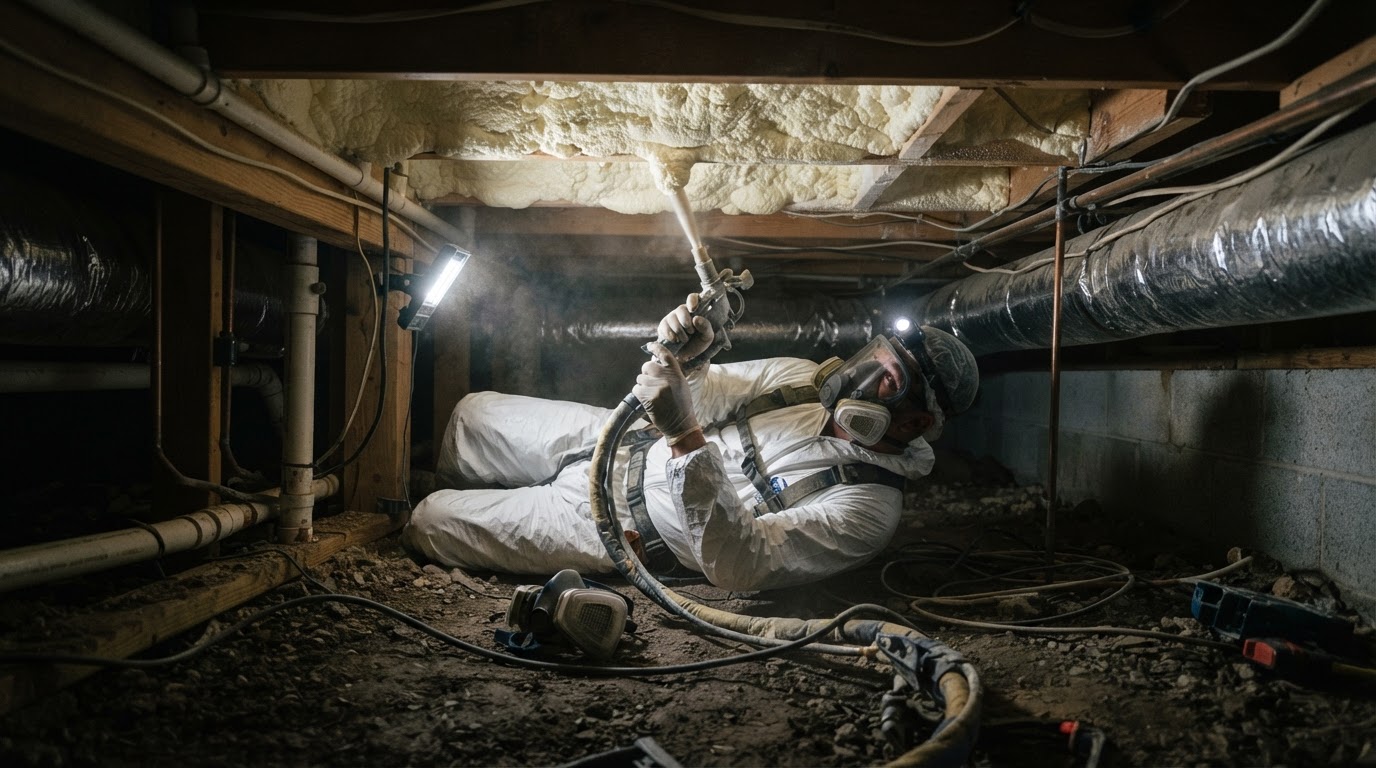
Where appropriate, spray foam can be applied to the underside of floor assemblies to help reduce air leakage through the floor.
Rim & Band Areas
Where applicable, rim and band areas can be sealed to help reduce air leakage at the perimeter of the floor assembly.
Accessible Penetrations
Specific crawl-space assemblies and penetrations can be sealed where access permits and conditions are appropriate.
The exact strategy depends on the building. We evaluate construction type, ventilation, moisture conditions, and access before recommending where spray foam fits.
Foam Choice & Moisture Considerations
Product characteristics and water/vapor behavior differ, and existing conditions must be evaluated before any recommendation.
Closed Cell Considerations
Closed cell foam resists moisture and acts as a vapor retarder at specified depths. It is often selected where moisture resistance is desired in a crawl-space assembly.
Closed cell detailsOpen Cell Considerations
Open cell foam is vapor permeable and may be appropriate in some framed assemblies where that behavior aligns with the building-envelope design.
Open cell detailsMoisture conditions are assessed first.
Leaks are fixed separately before foam.
Wood and substrates must be sound and dry.
The overall building-envelope design guides strategy.
Installation & Cost Factors for Crawl Spaces
Inspect moisture, substrate, ventilation, and access.
Confirm crawl-space height and entry points.
Address existing insulation and obstacles as needed.
Apply foam to appropriate assemblies and penetrations.
Work around plumbing and electrical carefully.
Verify coverage and review the finished work.
What Affects Crawl Space Cost
• Crawl-space height
• Access
• Square footage
• Existing insulation
• Surface preparation
• Plumbing/electrical obstacles
Crawl Space Spray Foam FAQs
Direct answers for Cape Coral homeowners with crawl-space foundations.
Request a Crawl Space Evaluation
Contact our Cape Coral team to evaluate your crawl-space conditions, moisture, and access before recommending a spray foam approach.