Existing Home & Retrofit Spray Foam Insulation in Cape Coral, FL
Spray foam can be incorporated into existing Cape Coral homes where assemblies and access make the application appropriate. We evaluate existing conditions and recommend an approach tailored to your property.
Retrofitting Cape Coral Homes With Spray Foam
Direct Answer: Retrofit spray foam insulation is the addition of spray foam to an existing home where assemblies are accessible—most commonly attic roof decks, open walls during remodels, and previously unfinished areas. It can help address aging insulation, air leakage, and the long cooling-season demands of Southwest Florida, but feasibility depends on access and existing conditions.
Many existing Cape Coral homes were built with traditional vented attics and fiberglass or cellulose insulation that may have settled, compressed, or accumulated dust over time. Air leakage through can lights, attic hatches, and drywall junctions can allow hot, humid outdoor air to infiltrate living spaces.
Where access permits, retrofit spray foam can create a continuous air barrier at the roof deck or within open wall cavities. Because existing construction varies widely, evaluating current conditions—substrate moisture, existing insulation, and ventilation—is essential before recommending an approach.
Where Retrofit Spray Foam Can Be Used
Access and existing construction determine where spray foam is feasible in an existing home.
Attics & Roof Decks
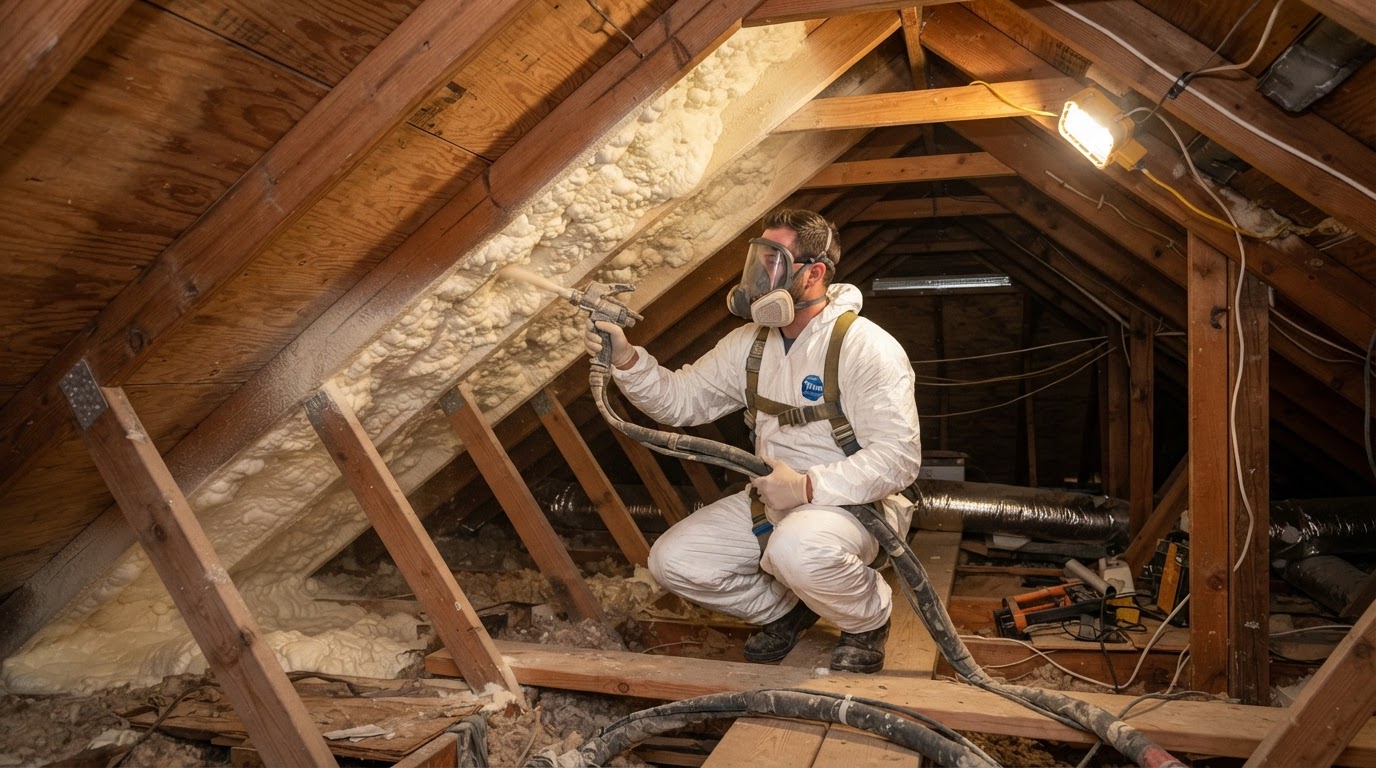
Applying foam to an existing roof deck can convert a vented attic into a conditioned space after evaluation.
Attic spray foam detailsRemodels & Additions
Walls and ceilings opened during remodels or additions create access for spray foam in open cavities.
Garages & Unfinished Areas
Previously unfinished garages and bonus rooms with exposed framing can be insulated as part of a retrofit.
Garage spray foam detailsExisting Insulation, Foam Choice & Building-Envelope Strategy
What is already in the assembly matters as much as what goes in next.
Existing Fiberglass & Cellulose
Whether removal is appropriate depends on the project. Dry, sound insulation may remain in some assemblies, while compressed or dusty material on an attic floor is often removed during a roof-deck conversion.
Moisture & Substrate Condition
Existing moisture issues should be addressed separately, and plumbing leaks corrected. We do not advise spraying over wet, contaminated, or damaged substrates.
Open Cell for Retrofits
Commonly used for retrofit attic roof decks with deep rafters, offering high expansion and sound-absorption characteristics.
Open cell detailsClosed Cell for Retrofits
Selected where moisture resistance or shallow-cavity performance is desired in a retrofit assembly.
Closed cell detailsRetrofit Spray Foam Installation Near Cape Coral
Inspect substrates, existing insulation, moisture, and access.
Determine which assemblies can be reached without damaging finishes.
Mask and protect occupied areas; address existing insulation as needed.
Remove or retain material based on the project evaluation.
Apply foam in controlled passes to accessible assemblies.
Remove masking, clean the work area, and review finished work.
What Affects Retrofit Cost
• Access difficulty
• Existing insulation removal
• Area size
• Foam type
• Surface preparation
• Assembly geometry
Retrofit Spray Foam FAQs
Answers for owners of existing Cape Coral homes.
Discuss Your Retrofit Insulation Project
Own an existing Cape Coral home? Contact our team to evaluate your attic, remodel, or accessible assemblies and recommend the right spray foam approach.