Pole Barn & Agricultural Building Spray Foam Insulation in Cape Coral, FL
Spray foam insulation for Cape Coral pole barns, equipment buildings, and agricultural structures. We evaluate post-frame construction, metal surfaces, and building use to recommend the right approach.
Why Insulate Pole Barns in Southwest Florida?
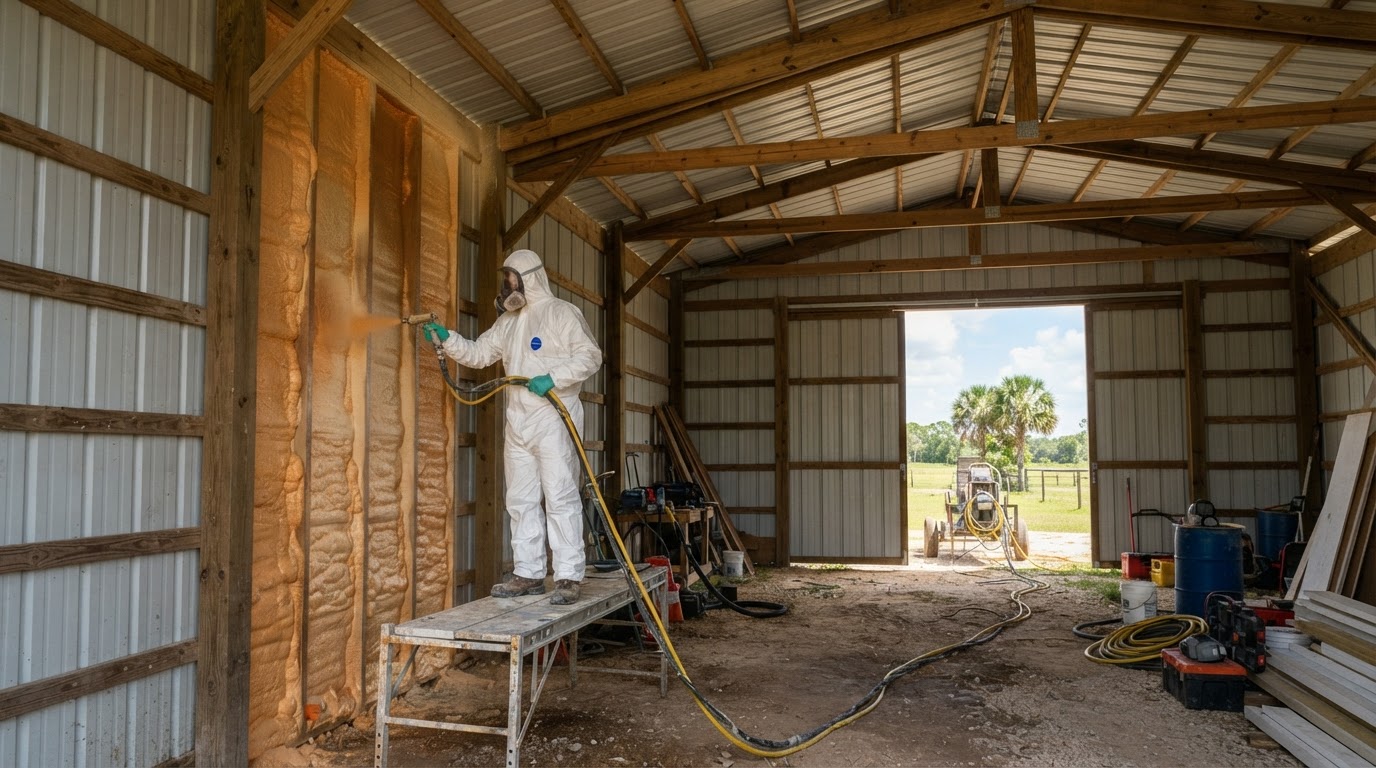
Direct Answer: Pole barns and post-frame agricultural buildings often use metal roofing and wall panels that transfer heat rapidly, creating hot interior conditions and condensation risk. Spray foam insulation applied to interior surfaces helps address radiant heat transfer and air leakage, supporting more stable interior temperatures for equipment, storage, or conditioned workspace.
In Cape Coral's hot, humid climate, metal pole barn roofs absorb intense solar radiation. Without insulation, interior temperatures can soar, affecting stored equipment, tools, and any conditioned workspace inside. Large open spans also allow warm, humid air to circulate freely.
Spray foam adheres to metal and wood substrates and conforms to corrugated profiles, helping reduce heat transfer and uncontrolled air leakage. Condensation is a broader building-science concern, so spray foam should be considered alongside ventilation and humidity planning rather than as a guaranteed fix.
Where Spray Foam Works in Agricultural Buildings
From equipment barns to workshops, spray foam adapts to many post-frame and agricultural structures.
Equipment Barns
Equipment barns and storage structures can benefit from moderated interior temperatures that help protect machinery.
Workshops
Pole barn workshops used for projects and hobbies can use spray foam for a more comfortable work environment.
Workshop spray foamFarm Utility Buildings
Farm utility and storage buildings can be insulated where conditioned or moderated interiors are desired.
Horse and livestock-related structures may also be considered where appropriate. We do not make animal-health claims; each structure is evaluated based on its assembly and intended use.
Foam Selection & Surface Considerations
The right foam depends on the substrate, building use, and whether the structure is new or existing.
Closed Cell Characteristics
- • Density and moisture resistance suit metal substrates
- • Adheres directly to steel roof and wall panels
- • Commonly selected where its specific properties are beneficial
Open Cell Where Appropriate
- • Considered for framed assemblies where vapor permeability aligns with design
- • High expansion fills deep cavities economically
- • May offer sound-absorption characteristics
Clean, dry steel supports proper adhesion.
Post-frame lumber is evaluated for moisture and condition.
Access differs between new and existing buildings.
Moisture and ventilation are considered together.
Installation & Cost Factors for Pole Barns
Confirm dimensions, roof height, and open-wall configuration.
Inspect metal panels, wood posts, and substrate condition.
Select foam type, thickness, and target wall/roof surfaces.
Mask stored equipment, tools, and openings.
Spray foam in controlled passes to specified surfaces.
Verify coverage and adhesion with the owner.
What Affects Pole Barn Cost
• Building size
• Roof height
• Open-wall configuration
• Surface area
• Foam type and thickness
• Access and equipment protection
Pole Barn & Agricultural Spray Foam FAQs
Direct answers for owners of Cape Coral pole barns and agricultural structures.
Request a Pole Barn Spray Foam Estimate
Own a pole barn or agricultural building near Cape Coral? Contact our team to discuss post-frame insulation, condensation considerations, and the right foam for your structure.