Metal Building Spray Foam Insulation in Cape Coral, FL
Spray foam insulation for Cape Coral metal buildings, steel shops, storage structures, and commercial metal buildings. We evaluate surface condition, building use, and condensation considerations to recommend the right approach.
Why Cape Coral Metal Buildings Benefit From Proper Insulation
Direct Answer: Metal buildings transfer heat rapidly through steel panels, creating hot interior conditions and temperature swings that can lead to interior surface condensation. Spray foam insulation applied to the interior of metal walls and roofs helps address radiant heat transfer and air leakage, supporting more stable interior conditions when the building is appropriately designed and insulated.
In Southwest Florida, metal roofs and walls absorb intense solar radiation throughout the day. Without insulation, that heat transfers directly into the building, raising interior temperatures and increasing the load on any cooling equipment. Metal surfaces can also collect condensation when warm, humid air meets a cooler panel.
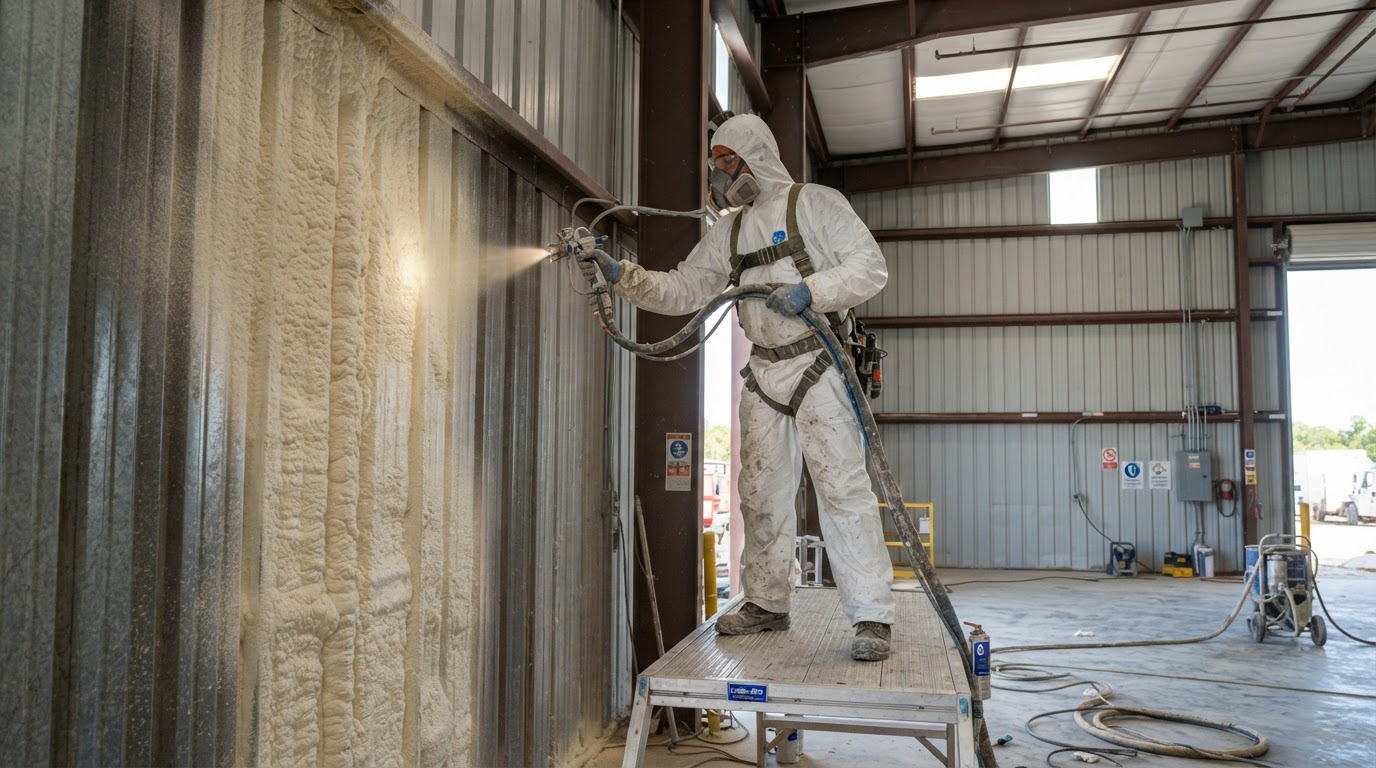
Spray foam adheres directly to metal substrates and conforms to corrugated profiles, helping reduce radiant heat transfer and uncontrolled air leakage. Condensation is a broader building-science concern influenced by ventilation, humidity, and the overall assembly, so spray foam should be considered as part of a complete moisture strategy rather than a standalone fix.
Where Spray Foam Works in Cape Coral Metal Buildings
From shops to storage and agricultural structures, spray foam adapts to many metal building types.
Metal Shops & Workshops
Conditioned metal shops and workshops benefit from moderated interior temperatures for tools and comfort.
Workshop spray foamStorage & Warehouses
Storage buildings and warehouses can use foam on walls and roofs to help protect stored goods.
Commercial Metal Structures
Commercial metal buildings can be insulated as part of a broader envelope strategy.
Commercial spray foamMetal garages, pole barns, and agricultural structures are also common candidates—see our garage and pole barn pages for those specific applications.
Closed Cell Foam & Metal Assembly Considerations
Closed cell foam is often considered for metal assemblies because of its density, moisture resistance, and adhesion to steel, while product and assembly selection remain project-specific.
Steel must be clean, dry, and free of rust, dust, and oils to support proper adhesion.
Existing paints or coatings are evaluated to confirm compatibility with foam adhesion.
Building use and desired interior conditions help determine foam thickness and target surfaces.
Roof panels face the most solar exposure; walls and roofs may receive different treatment.
Closed cell resists moisture; the overall vapor strategy should consider ventilation and humidity.
Learn more about closed cell characteristics and where it is commonly selected.
Closed cell detailsWe do not claim structural strengthening beyond appropriately cautious wording. Each metal building is evaluated individually before a recommendation is made.
Metal Building Spray Foam Installation Near Cape Coral
Review how the building is used and desired interior conditions.
Inspect metal panels, coatings, height, and access.
Select foam type, thickness, and wall/roof surfaces.
Mask openings, stored items, and sensitive areas.
Spray foam in controlled passes to specified surfaces and depths.
Verify coverage and adhesion with the owner.
What Affects Metal Building Cost
• Building dimensions
• Wall and roof surface area
• Height and access
• Foam thickness
• Equipment/storage protection
• Surface preparation
Metal Building Spray Foam FAQs
Direct answers for owners of Cape Coral metal buildings and steel structures.
Request a Metal Building Spray Foam Estimate
Own a metal building in Cape Coral? Contact our team to discuss surface preparation, condensation considerations, and the right foam for your structure.