
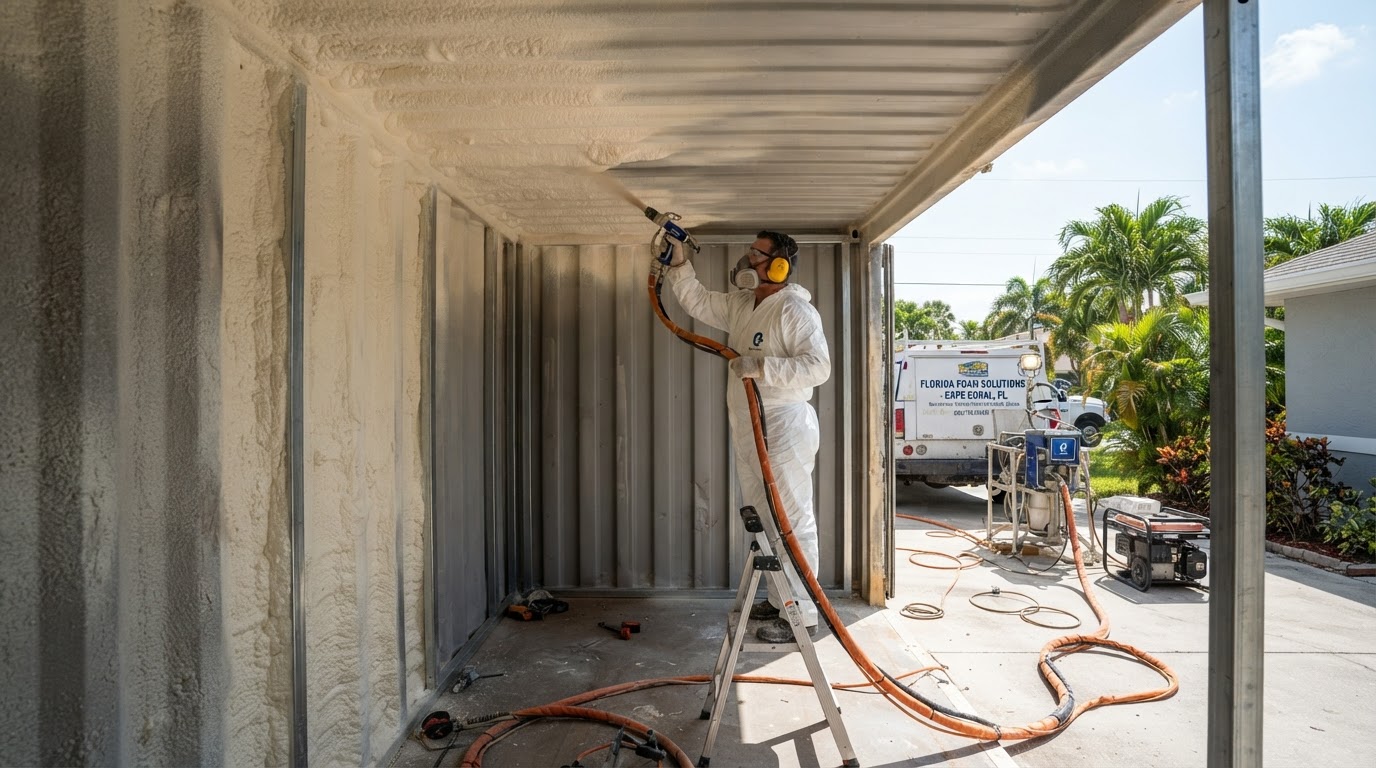
Shipping Container Spray Foam Insulation in Cape Coral, FL
Spray foam insulation for Cape Coral shipping containers, container workshops, and conversions. We evaluate the thin metal shell, condensation risk, and limited interior space to recommend a careful, container-specific approach.
Why Shipping Containers Need Special Insulation Planning
Direct Answer: Shipping containers have a thin corrugated steel shell that transfers heat rapidly and is prone to interior condensation in humid Southwest Florida conditions. Spray foam is considered for containers because it adheres directly to metal, helps reduce radiant heat transfer and air leakage, and conforms to the corrugated profile, while limited interior space makes foam thickness a key planning consideration.
A container's steel walls absorb intense solar radiation, transferring heat directly into the interior. Without insulation, a container in Cape Coral sun can reach extreme interior temperatures, and the thin metal shell can collect condensation when warm, humid air meets the cooler steel surface.
Because containers have limited interior space, the thickness of any insulation affects usable room. Closed cell foam's higher thermal resistance per inch is often relevant where space is constrained. We do not assume a container conversion is legally approved for occupancy, and each project is evaluated individually.
Types of Container Projects We Help Evaluate
Storage Containers
Containers used for storage where moderated conditions are desired.
Container Workshops
Containers converted into workshops and project spaces.
Container Offices
Containers used as conditioned office or utility spaces.
Container Conversions
Containers converted for conditioned utility use.
Conditioned Utility Spaces
Containers serving as conditioned utility or equipment spaces.
Container-Based Structures
Container-based structures where applicable and evaluated.
We do not assume a container conversion is legally approved for occupancy. Each project is evaluated individually.
Closed Cell vs. Open Cell for Containers
Because containers are metal enclosures with limited space, foam selection leans toward closed-cell characteristics, while product choice remains project-specific.
Closed Cell for Containers
Closed cell is often considered for container walls and ceilings because of its density, moisture resistance, and higher thermal resistance per inch, which suits the limited interior space and metal substrate.
Closed cell detailsOpen Cell Considerations
Open cell may suit framed interior buildouts within a container where sound absorption is a consideration. Its greater thickness requirement and vapor permeability mean the overall assembly and moisture strategy must be evaluated before selection.
Open cell detailsRust and corrosion must be addressed before application.
Limited interior space makes foam thickness a key factor.
Ventilation and humidity considered alongside insulation.
Shipping Container Spray Foam Process & Cost Factors
Review intended use, storage, or conditioned conversion.
Inspect metal condition, rust, coatings, and existing buildout.
Determine which walls and ceiling surfaces to insulate.
Address rust, clean metal, and protect interior areas.
Install appropriate foam in controlled passes.
Verify coverage and adhesion with the owner.
What Affects Container Cost
• Container dimensions
• Walls vs ceiling
• Foam type
• Foam thickness
• Interior buildout
• Surface preparation
• Rust and coatings
• Access
• Existing finishes
Shipping Container Spray Foam FAQs
Direct answers for Cape Coral container project owners.
Request a Shipping Container Estimate
Planning to insulate a container in Cape Coral? Discuss metal substrate condition, condensation risk, and space constraints with our team.