Spray Foam Insulation for Sound & Noise Control in Cape Coral, FL
Spray foam for sound absorption and noise reduction in Cape Coral homes, offices, garages, and workshops. We use accurate language—foam supports sound control as part of a broader assembly, not complete soundproofing on its own.
Can Spray Foam Soundproof a Room in Cape Coral?
Direct Answer: Spray foam can help with sound absorption and air sealing, but complete soundproofing normally requires a broader assembly of materials and construction techniques. Open cell foam absorbs airborne sound energy and fills cavities that would otherwise transmit noise, supporting a noise-control strategy as part of a complete wall, ceiling, door, and window assembly.
Sound transmission depends on wall mass, decoupling, flanking paths, doors, windows, and the overall assembly design. Spray foam addresses air sealing and cavity resonance, which can reduce airborne noise, but it does not replace the mass and decoupling needed for high-level sound isolation.
We use accurate phrasing—sound absorption, noise reduction support, and acoustic improvement—rather than promising complete soundproofing. For spaces that require high isolation, dedicated acoustic products and construction techniques are typically needed alongside insulation.
Where Spray Foam Supports Noise Control
Interior Walls
Wall cavities between rooms where airborne sound transmission is a concern.
Bedrooms
Bedroom walls where quieter sleeping environments are desired.
Home Offices
Home office walls to reduce noise from adjacent spaces.
Garages
Garage walls and ceilings for hobby and project noise control.
Workshops
Workshop walls where equipment noise is a consideration.
Commercial Partitions
Commercial interior partitions where speech privacy matters.
We do not promise specific decibel reductions. Sound performance depends on the complete assembly, including mass, decoupling, and flanking paths.
Open Cell Foam & Acoustic Considerations
Open cell foam's lower-density structure absorbs sound energy, making it a common choice for sound-control applications, while the overall assembly determines final performance.
Open cell's cellular structure absorbs airborne sound energy.
Fills cavities that would otherwise transmit noise through air paths.
Doors, windows, and structural paths can bypass wall insulation.
Mass is a key factor in sound isolation; foam adds absorption, not mass.
Decoupled framing reduces structural sound transmission.
Final performance depends on the complete assembly design.
We do not imply foam replaces dedicated acoustic products in every situation. For high-level sound isolation, dedicated acoustic construction is typically required.
Sound-Control Spray Foam Process & Cost Factors
Review noise sources and desired sound-control outcomes.
Assess accessible framing and existing wall assemblies.
Select foam type and target wall or ceiling areas.
Open walls for remodeling or access existing cavities.
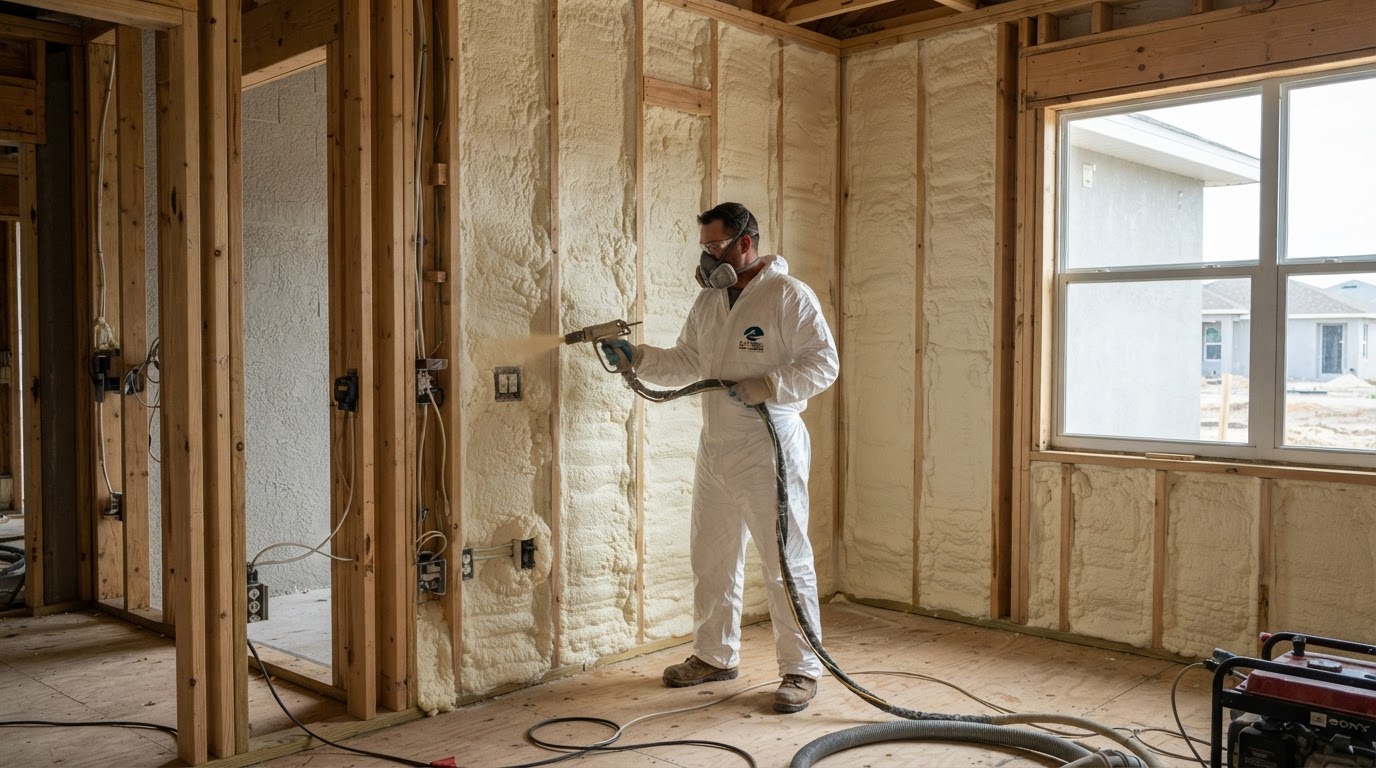
Install open cell foam in controlled passes.
Verify coverage and discuss additional acoustic measures.
What Affects Sound-Control Cost
• Wall and ceiling square footage
• Accessible framing
• New construction vs retrofit
• Open vs enclosed walls
• Foam type
• Adjacent assemblies
• Project goals
• Access requirements
• Existing insulation
Sound & Noise Control Spray Foam FAQs
Direct answers for Cape Coral property owners considering spray foam for noise control.
Talk About Your Sound-Control Project
Considering spray foam for noise control in Cape Coral? Discuss sound absorption, wall assemblies, and realistic expectations with our team.