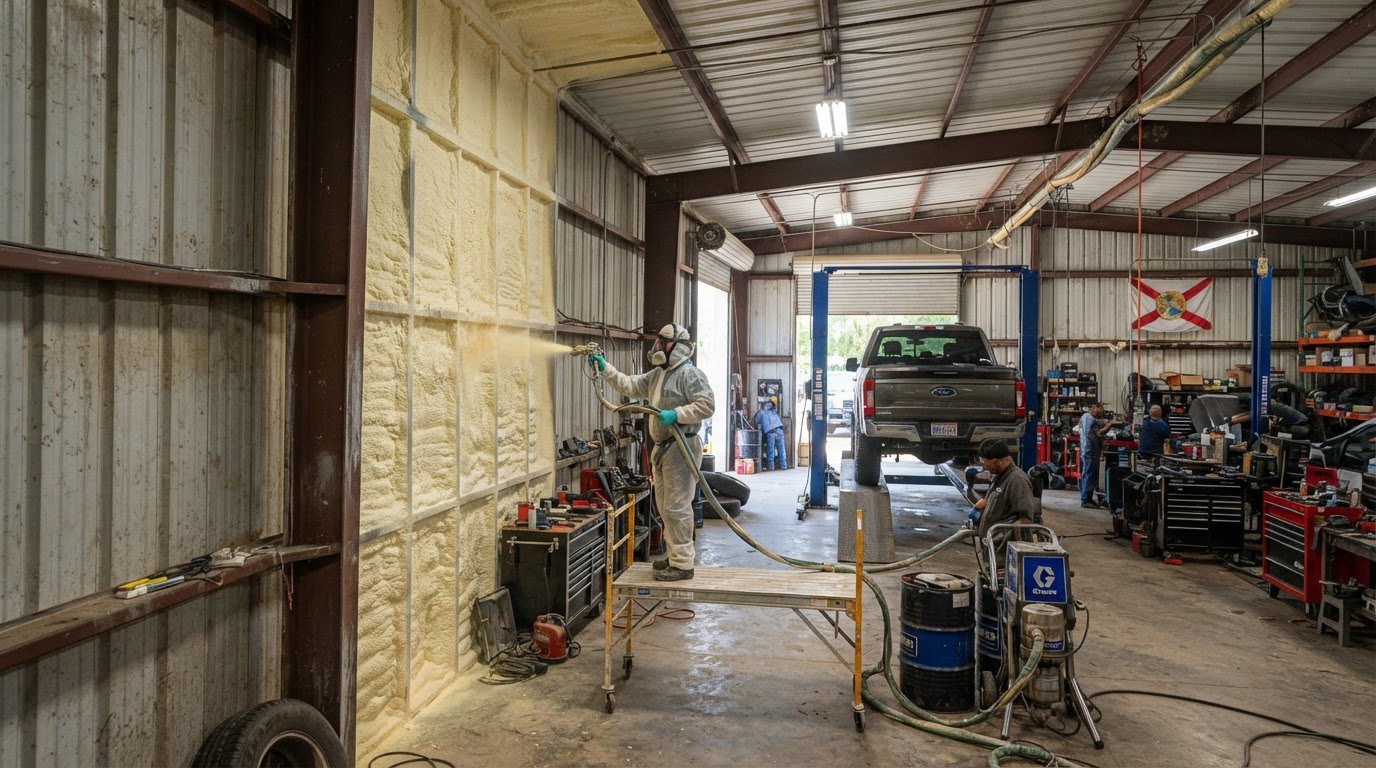
Metal Shop Spray Foam Insulation in Cape Coral, FL
Spray foam insulation for Cape Coral metal shop buildings, mechanic shops, and steel fabrication workspaces. We evaluate metal surfaces, condensation considerations, and conditioned-workspace goals to recommend the right approach.
Why Cape Coral Metal Shops Benefit From Insulation
Direct Answer: Metal shop buildings transfer heat rapidly through steel roof and wall panels, creating hot interior conditions and temperature swings that can lead to surface condensation. Spray foam applied to the interior of metal walls and roofs helps address radiant heat transfer and air leakage, supporting more stable interior conditions for conditioned workspaces when the building is appropriately designed and insulated.
A metal shop's roof absorbs intense Southwest Florida solar radiation, transferring heat directly into the work area. For a mechanic shop, fabrication building, or personal workspace, that heat gain makes working conditions difficult and increases the load on any cooling equipment. Large door openings and panel seams also allow uncontrolled air infiltration.
Metal surfaces can collect condensation when warm, humid interior air meets a cooler panel, a building-science concern influenced by ventilation, humidity, and the overall assembly. Spray foam helps reduce the temperature differential between interior air and the metal surface, but it should be considered part of a complete moisture strategy rather than a standalone fix for condensation.
Types of Metal Shops We Help Evaluate
Automotive Shops
Mechanic shops where moderated interior temperatures support work conditions.
Mechanical Workspaces
Mechanical and equipment work buildings with conditioned areas.
Fabrication Buildings
Fabrication-type work buildings with heat-sensitive processes.
Personal Metal Shops
Detached personal steel shops for hobby and project use.
Equipment Shops
Equipment storage and maintenance shops.
Detached Steel Shops
Detached steel shop buildings on residential or commercial property.
We do not claim suitability for hazardous industrial occupancies without project-specific evaluation. Each shop is assessed individually before a recommendation is made.
Closed Cell Foam & Metal Shop Considerations
Closed cell foam is often considered for metal shop assemblies, while product selection remains tied to substrate condition, building use, and the overall moisture strategy.
Steel must be clean, dry, and free of rust and oils for proper adhesion.
Closed cell's dense, rigid cured surface suits metal wall and roof assemblies.
Closed cell resists moisture; the overall vapor strategy considers ventilation and humidity.
Building use and desired interior conditions help determine foam thickness.
Existing paints or coatings are evaluated for compatibility with foam adhesion.
Corrosion, dirt, and existing finishes influence the recommended preparation.
We do not imply that closed cell automatically solves condensation. Ventilation, humidity control, and the overall assembly must be considered together.
Metal Shop Spray Foam Installation & Cost Factors
Review how the shop is used and desired interior conditions.
Evaluate metal panels, coatings, height, and access.
Choose foam type, thickness, and wall/roof surfaces.
Mask tools, machinery, openings, and stored items.
Spray foam in controlled passes to specified surfaces.
Verify coverage and adhesion with the owner.
What Affects Metal Shop Cost
• Building size
• Ceiling height
• Roof shape
• Wall area
• Surface preparation
• Equipment protection
• Access
• Foam type
• Foam thickness
Metal Shop Spray Foam FAQs
Direct answers for Cape Coral metal shop owners.
Get a Metal Shop Insulation Estimate
Own a metal shop in Cape Coral? Discuss surface preparation, condensation considerations, and conditioned-workspace goals with our team.