Horse Barn & Livestock Building Spray Foam Insulation in Cape Coral, FL
Spray foam insulation for Cape Coral horse barns, stables, and enclosed agricultural structures. We evaluate metal roofs, walls, and enclosed utility areas with ventilation planning to recommend the right approach.
Why Spray Foam Is Considered for Cape Coral Horse Barns
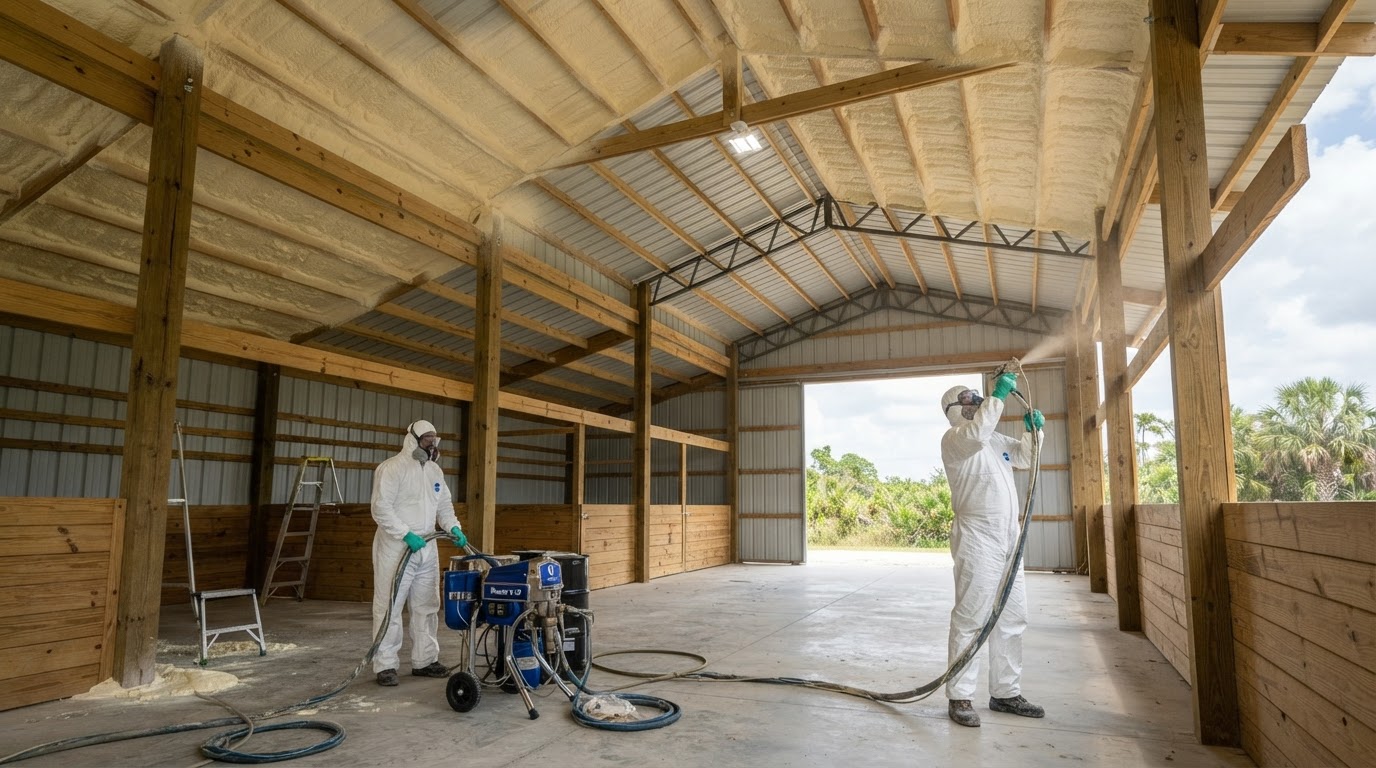
Direct Answer: Horse barns and livestock buildings in Cape Coral often have metal roofs and walls that absorb solar heat, creating hot interior conditions in enclosed feed, tack, and utility areas. Spray foam is considered for these enclosed spaces because it helps reduce radiant heat transfer and air leakage, supporting moderated conditions for storage and work areas, while open stall areas retain their ventilation requirements.
A barn's metal roof transfers intense Southwest Florida solar heat into the structure. In enclosed feed rooms, tack rooms, or conditioned utility spaces, that heat gain can make storage and work areas uncomfortable. Spray foam applied to enclosed areas helps address radiant heat transfer and uncontrolled air movement.
We do not claim that spray foam improves animal health, prevents illness, guarantees livestock comfort, or eliminates ventilation requirements. Barn ventilation remains essential, and spray foam is one part of a broader building and moisture strategy evaluated alongside the building's use and design.
Agricultural Structures We Help Evaluate
Horse Barns
Enclosed areas of horse barns with feed, tack, and utility rooms.
Stable-Related Structures
Stable buildings with enclosed conditioned utility spaces.
Livestock Buildings
Enclosed livestock buildings where moderated conditions are desired.
Tack & Feed Rooms
Enclosed tack and feed rooms insulated separately from open stalls.
Equipment Spaces
Barn equipment and utility spaces with conditioned storage needs.
Barn Workshops
Workshop areas within barn structures used for projects and repairs.
Spray Foam Selection & Barn Ventilation Planning
Foam selection for barns considers the substrate, building use, and the essential ventilation requirements of agricultural structures.
Barn ventilation remains essential; spray foam does not eliminate it.
Closed cell often considered for metal barn roofs and walls.
Open cell may suit framed interior partitions and deep cavities.
Enclosed areas insulated separately from open stall spaces.
Metal and wood substrates evaluated for adhesion and preparation.
Overall moisture strategy considers ventilation and humidity.
Horse Barn Spray Foam Installation & Cost Factors
Review enclosed areas, stalls, feed rooms, and ventilation.
Inspect roof, walls, height, access, and substrate.
Select foam type and thickness for enclosed spaces.
Clean metal, mask openings, and protect equipment.
Spray foam to enclosed areas in controlled passes.
Verify coverage and adhesion with the owner.
What Affects Horse Barn Cost
• Barn dimensions
• Ceiling height
• Roof and wall area
• Open vs enclosed spaces
• Surface preparation
• Access
• Foam type
• Foam thickness
• Ventilation considerations
Horse Barn & Livestock Building FAQs
Direct answers for Cape Coral agricultural building owners.
Request a Horse Barn Insulation Estimate
Own an agricultural barn in Cape Coral? Discuss enclosed areas, ventilation planning, and metal-surface insulation with our team.